
Surviving the Warm Night Phenomenon: Holistic Heat Stress Remedies
1. Introduction: The Stagnant Midnight Crisis
Imagine an all-too-familiar scenario played out across countless Indian households every single summer: It is two o’clock in the morning. You have long since turned off the television, put away your work, and minimized your lights, hoping to drift into a deep, restorative sleep. Instead, you find yourself tossing and turning restlessly, tossing aside your top sheets as an oppressive, stagnant, heavy warmth wraps around the bedroom. Your ceiling fan spins at its absolute maximum velocity, yet it feels as though it is merely redistributing a soup-like, suffocating layer of hot air. Your skin is coated in a fine, sticky sheen of sweat, your mouth feels instantly parched upon waking, and a dull, throbbing ache begins to manifest right behind your temples.
Even if you are fortunate enough to have an air conditioner running, the moment you step out of its direct cold draft, or if you try to turn it off to regulate room humidity and conserve electricity, the heavy heat returns instantly, invading your sanctuary. This agonizing, nocturnal struggle is no longer just an occasional seasonal annoyance. It is a highly scrutinized, globally recognized environmental and clinical medical reality known to experts as the warm night phenomenon. Driven by accelerating global temperatures and expanding concrete infrastructure, our nighttime environments are failing to cool down, trapping urban populations in a continuous, twenty-four-hour cycle of **climate induced heat stress**.
Historically, the setting sun brought genuine physiological relief. The earth would naturally shed its daytime thermal load through radiative cooling, dropping ambient outdoor temperatures by ten to twelve degrees Celsius. This drop provided a vital environmental window that allowed the human body to shed internal heat, decrease its metabolic rate, and shift into the cellular repair mode required for deep healing. Today, however, that crucial thermal gap is shrinking rapidly.
According to extensive meteorological observations compiled by the World Health Organization (WHO) and the India Meteorological Department (IMD), minimum nighttime temperatures across urban and semi-urban landscapes are rising at an alarming velocity compared to historical baselines. When ambient nighttime environments remain consistently elevated, our natural biological systems cannot recover. Instead of resting, our nervous systems remain locked in an exhausting, low-grade fight-or-flight response all night long.
At Suman Homoeo Clinic, we are seeing an unprecedented influx of patients during the summer months presenting not with classic daytime sunstroke, but with a complex cluster of chronic nocturnal heat exhaustion symptoms. Working professionals complain of persistent morning brain fog and chronic irritability. Elderly individuals experience unexplained nocturnal heart palpitations and sudden spikes in baseline blood pressure. Students struggle with deep concentration deficits, while young children wake up multiple times a night, restless, crying, and highly dehydrated.
This comprehensive, multi-disciplinary **heatwave survival guide** bridges modern physiological science with time-tested holistic therapies, offering an integrative roadmap to help you understand **how to cool body naturally**, safeguard your sleep architecture, and reclaim your daily vitality during the harshest climate shifts.
2. Deep Dive: What is the Warm Night Phenomenon?
To effectively combat the debilitating **heatwave health effects**, we must first understand the thermodynamic and environmental patterns that dictate them. The term “warm night phenomenon” refers to a specific climatological trend where the minimum nocturnal temperature remains exceptionally high, often failing to drop below 28°C or even 30°C in dense urban settings. Under normal ecological conditions, the planet experiences a balanced diurnal temperature variation. The sun heats the surface during the daytime, and at night, that heat escapes back into the upper atmosphere via infrared radiation.
However, rapid, horizontal urbanization and industrialization have fundamentally altered this delicate balance, creating what environmental scientists term the Urban Heat Island (UHI) effect. Modern cities are built almost entirely out of asphalt, dense concrete, brick, and steel. These materials possess incredibly high thermal mass, meaning they act like giant thermal sponges during the day, absorbing massive amounts of solar radiation.
When the sun goes down, these structures do not cool instantly. Instead, they begin to slowly and continuously bleed that stored heat back into the surrounding low-altitude air currents throughout the night. Consequently, the ambient outdoor temperature remains suffocatingly high precisely when humans are trying to achieve physical rest.
The Clinical Paradox: Why Hot Nights Are Scientifically More Dangerous Than Hot Days
During the daylight hours, humans consciously adapt to intense temperatures: we seek shade, limit strenuous physical labor, consume cold liquids, wear protective gear, and utilize artificial cooling. At night, however, our biological defenses are completely down. We are asleep, or attempting to sleep, a state where our bodies rely entirely on automatic, unconscious homeostatic mechanisms to regulate core temperature. If the environment around us does not cool down, the thermal gradient between our core body temperature and the ambient air narrows. The body cannot efficiently unload its internal thermal load, leading to severe internal strain on major organ groups.
The Systemic Impact on Human Physiology
The human body’s internal thermostat is governed by the preoptic area of the anterior hypothalamus. To initiate deep sleep, our core body temperature must naturally drop by approximately 0.5°C to 1°C. This drop is triggered by peripheral vasodilation—the widening of blood vessels near the skin’s surface—which allows heat to radiate out of the body. When ambient room temperatures match or exceed skin temperature (typically around 32°C to 34°C), this vital heat exchange grinds to a halt.
- Sleep Quality Deficits: The inability to shed core body heat directly interferes with the secretion of melatonin, the primary sleep hormone. Sleep becomes highly fragmented, with a drastic reduction in deep slow-wave sleep and Rapid Eye Movement (REM) sleep—the two stages absolutely essential for cellular repair, immune consolidation, and neurological memory processing. This explains why **dehydration and sleep problems** almost always go hand-in-hand during summer heatwaves.
- Cardiovascular Strain: Because the body cannot radiate heat naturally through stagnant air, the heart is forced to work exponentially harder. It increases cardiac output by beating faster and pumping blood aggressively to the skin surface in a desperate bid to facilitate cooling. For elderly individuals or those with underlying cardiovascular conditions, this unremitting nocturnal workload significantly escalates the risk of nocturnal arrhythmias, myocardial strain, and ischemic events, a fact extensively documented in the World Health Organization Heatwave Guidance.
- Neurological Burnout: Extended exposure to elevated nighttime temperatures prevents the brain from clearing metabolic waste effectively during sleep. The result is a substantial rise in nocturnal cortisol (stress hormone) levels. Patients wake up feeling unrefreshed, anxious, and emotionally volatile, directly linking regional heatwave health effects to a surge in clinical anxiety and panic disorders.
- Pediatric Vulnerabilities: Children have a higher surface-area-to-mass ratio than adults, meaning they absorb environmental heat much faster, yet their sweat glands are not fully developed, making them highly prone to rapid dehydration.
3. Clinical Indicators: Signs Your Body is Not Recovering
Heat stress does not always manifest as a dramatic, sudden heatstroke. More often, when driven by warm nights, it takes the form of a slow, insidious accumulation of physical and mental exhaustion. Recognizing these early, subtle warnings can help you implement targeted interventions before deep cellular depletion occurs.
The most prominent sign is profound, unyielding **summer fatigue remedies**-resistant lethargy. If you find yourself waking up after seven or eight hours of sleep feeling as though you haven’t slept at all, your body has likely spent the night fighting a thermal battle instead of resting. This is almost always accompanied by persistent “morning brain fog”—a subjective feeling of cognitive dullness, short-term memory lapses, and an inability to focus on complex tasks during the early hours of the day.
Another vital marker is hidden chronic dehydration. Waking up with a sticky, dry mouth, a coated tongue, or a deep, localized throbbing at the base of your skull—often termed a **remedies for sun headache** indicator—tells you that your body has depleted its fluid reserves overnight through imperceptible perspiration. Pay close attention to the color and volume of your first morning urination; if it is deep amber, highly concentrated, or scanty, you are operating under a severe systemic water deficit.
Physical & Physiological Warning Indicators:
- Nocturnal muscle cramps in the calves, feet, or abdominal wall due to localized sodium and magnesium depletion via sweat.
- Waking up drenched in localized sweat (neck, chest, lower back) despite a fan or cooling appliance running continuously.
- A persistent, low-grade elevation in resting morning heart rate (5–10 beats per minute higher than your winter baseline).
- Digestive sluggishness, chronic acidity, bloating, and a complete lack of morning appetite due to blood being diverted away from the stomach.
Neurological & Immune Warning Indicators:
- Extreme emotional irritability, low frustration tolerance, and sudden daytime mood swings.
- A constant feeling of internal restlessness or “burning” sensations in the palms of the hands and soles of the feet.
- Frequent susceptibility to summer allergies, skin rashes (prickly heat), and minor viral infections due to compromised nocturnal immune recovery.
4. Traditional Wisdom: Ayurveda’s View on Pitta Aggravation
Long before modern science quantified the urban heat island effect, the ancient rishis of Ayurveda deeply understood the relationship between cosmic seasonal shifts and human biology. In Ayurvedic physiology, the summer season is designated as Grishma Ritu, a period dominated by the solar principle, where the sun saps the moisture, strength, and cooling properties of the earth and its living beings.
From a doshic perspective, summer is the prime time for the accumulation and absolute aggravation of Pitta Dosha. Composed of the fire (Agni) and water (Jala) elements, Pitta governs all metabolic processes, enzymatic transformations, digestion, and body temperature regulation. When the external environment remains aggressively hot—especially during the night—the internal Pitta fire flares out of control. This systemic imbalance manifests as a feeling of internal burning, excessive thirst, inflammatory skin flare-ups, loose stools, hyperacidity, and volatile emotions like anger and impatience.
To counter this, Ayurveda prescribes the wisdom of **Ritucharya**—the meticulous modification of diet, lifestyle, and behavioral habits to match the changing seasons. The core principle of Ritucharya is simple yet profound: *like increases like, and opposites cure*. To pacify a blazing, aggravated Pitta, we must systematically introduce elements that possess cooling (Shita), hydrating (Dravya), sweet (Madhura), and soothing qualities. Shifting away from heavy, heating foods toward specific **pitta pacifying foods** alters the thermal output of your digestion, reducing internal heat production.
The Ultimate Portfolio of Pitta Pacifying Foods
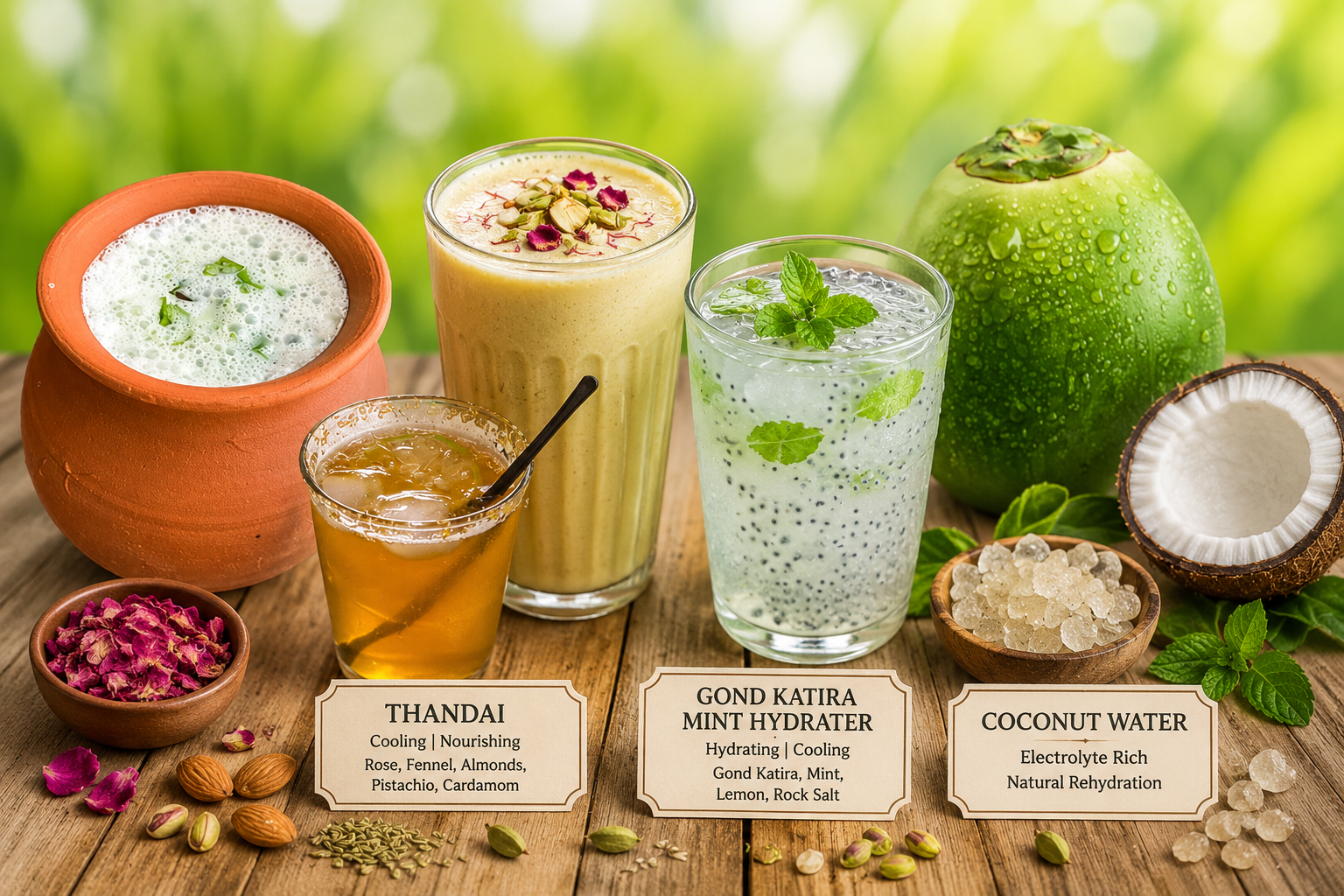
- Gulkand (Rose Petal Preserve): This traditional Ayurvedic formulation is arguably one of the most potent natural coolants known to mankind. Prepared by layering organic damask rose petals with rock sugar and curing them slowly in the sun, Gulkand possesses deep anti-pitta, anti-inflammatory, and mild laxative properties. Taking a single teaspoon of Gulkand in warm or room-temperature A2 cow’s milk before bed acts as an anchor for thermal regulation, cooling the blood and soothing the stomach lining to prevent nighttime acid reflux.
- Earthen-Pot Coconut Water: While fresh coconut water is naturally packed with vital electrolytes like potassium, magnesium, and calcium, storing it or drinking it at a balanced temperature optimizes its utility. It matches human plasma osmolarity perfectly, making it an exceptional **natural treatment for dehydration**. It instantly quenches cellular thirst and flushes out excess metabolic heat through the urinary tract.
- Gond Katira (Tragacanth Gum): Often confused with regular gum arabic, Gond Katira is a plant-derived sap that swells into a translucent, jelly-like mass when soaked in water overnight. It is widely revered in North Indian households as an absolute shield against heat exhaustion. It lacks any inherent flavor, making it highly versatile; it can be added to any beverage to provide a soothing, gelatinous coating to the digestive tract, instantly dropping core body temperature.
- Sabja Seeds (Sweet Basil Seeds): When immersed in water, Sabja seeds develop a gelatinous outer layer within minutes. They are highly cooling in nature and act as a wonderful cooling agent for the lower abdomen. They help eliminate constipation, which is a common, highly distressing byproduct of heatwaves that locks toxic heat inside the pelvic cavity.
- Buttermilk (Chhas) with Roasted Cumin: Freshly churned buttermilk, diluted with water and stripped of its heavy fat content, is praised in Ayurvedic texts as nectar for the human gut. When seasoned with a pinch of rock salt, fresh mint paste, and roasted cumin powder, it aids the digestive fire without generating internal heat, providing immediate relief from summer-induced sluggishness.
Ingredients: 10 almonds (soaked overnight and peeled), 2 tsp fennel seeds (saunf), 1 tsp khus-khus (poppy seeds), 5 whole black peppercorns (to balance digestion), 2 tbsp organic dried rose petals, 1/2 tsp green cardamom powder, and 1 tbsp rock sugar (mishri).
Method: Grind all the soaked and dry ingredients together with a splash of water into an ultra-fine, smooth paste. Dissolve this paste thoroughly into a glass of cool, earthen-pot water or organic boiled-and-cooled milk. Strain through a fine muslin cloth. Consume this mid-afternoon around 3:00 PM when the daytime heat transitions into storage heat, preventing the evening accumulation of Pitta.
Ingredients: 1 tablespoon of pre-soaked, fully expanded Gond Katira jelly, a handful of fresh mint leaves, 1 tablespoon of fresh lime juice, a pinch of pink Himalayan salt, and 1 glass of room-temperature water.
Method: Muddle the fresh mint leaves gently at the bottom of a tall glass. Add the lime juice, pink salt, and the jelly-like Gond Katira. Pour over the room-temperature water and stir vigorously. This provides a powerhouse of hydration, binding moisture within the cellular matrices and preventing nocturnal electrolyte drop.
Foods to Absolutely Avoid During a Heatwave
Just as we must emphasize **best foods during heatwave** selections, we must ruthlessly eliminate items that fuel the internal fire. Avoid highly spicy foods containing excess red chili, black mustard seeds, garlic, and raw onions, as these possess an Ushna (hot) potency that excites the circulatory system. Limit sour, fermented foods like old curd, pickles, and vinegar, which acidify the bloodstream.
Furthermore, completely avoid ice-cold drinks straight from the deep freezer. While they offer a fleeting psychological sensation of coolness, the extreme cold shocks the stomach, causes immediate vasoconstriction of the gastric capillaries, halts digestion completely, and prompts the hypothalamus to generate *more* internal heat to normalize the stomach’s temperature. Stick firmly to water cooled naturally in traditional red clay or terracotta earthen pots.
5. Breathwork: Sheetali Pranayama & Cooling Practices
The respiratory system is a primary pathway for heat exchange, and through specific yogic breathwork, humans can utilize this mechanism to directly influence the autonomic nervous system. When struggling to sleep on a warm night, turning on your side and engaging in specific pranayamas can induce rapid, profound changes in your core body temperature and stress markers.
The most powerful practice for this purpose is Sheetali Pranayama (the Cooling Breath). The term *Sheetali* itself is derived from the Sanskrit root *Sheetal*, meaning calm, soothing, and cold. The physiological mechanism is beautiful in its simplicity: by drawing air through a moist, restricted passage formed by the tongue, you accelerate the evaporation of saliva.
This evaporative process directly cools the blood running through the dense capillary networks of the tongue and oral cavity. This cooled blood then circulates back to the brain, specifically passing close to the hypothalamus, signaling the body to lower its thermal set-point, dial down peripheral vasoconstriction, and induce a state of deep physical relaxation.
Step-by-Step Guide to Practicing Sheetali Pranayama
- Sit in a comfortable, relaxed posture, preferably Sukhasana (cross-legged) or seated upright in a supportive chair with your spine straight and shoulders dropped.
- Close your eyes and take two or three natural, grounding breaths through your nose to settle your heart rate.
- Extend your tongue out of your mouth slightly and roll the lateral edges inward to form a distinct tube or straw-like shape.
- Inhale slowly, deeply, and smoothly through this rolled tongue tube. You should hear a soft, rushing sibilant sound as the air passes over the moisture of your tongue. Feel the intense sensation of cold spreading across your palate and down into your throat.
- At the end of the inhalation, draw your tongue back inside, close your mouth, and hold the breath internally for a brief, comfortable moment (2–3 seconds)—avoid any straining.
- Exhale slowly, quietly, and completely through both nostrils.
- Repeat this cycle for 15 to 20 continuous rounds, keeping your awareness anchored entirely on the cooling sensation.
Safety Precautions & Sheetali Pranayama Benefits: Because Sheetali cools the respiratory tract rapidly, it should never be practiced in environments with heavily polluted air or during freezing weather. Individuals suffering from chronic bronchitis, asthma, severe respiratory congestion, or extremely low blood pressure should avoid this practice. For everyone else, it is highly recommended to practice this right before going to bed on a warm night, or if you wake up sweating and restless at midnight.
Alternative Cooling Breathing Techniques
If you are among the significant percentage of the population who are genetically unable to roll the edges of their tongue, do not worry. Ancient yoga science provides an equally effective alternative: Sheetkari Pranayama. To practice Sheetkari, open your lips slightly, clench your upper and lower teeth together gently, and press the tip of your tongue flat against the back of your front teeth. Inhale deeply through the gaps in your teeth, creating a soft hissing sound. Close your mouth and exhale smoothly through your nostrils. The underlying thermodynamic principle remains identical.
To augment this, incorporate Chandra Bhedana Pranayama (Moon-Piercing Breath). In yogic subtle anatomy, the left nostril represents the *Ida Nadi*, which corresponds to the cooling, soothing, lunar energy of the body, closely mirroring the parasympathetic nervous system. Using your right thumb, block your right nostril entirely. Inhale slowly and deeply through your left nostril. Then, close your left nostril with your ring finger, open the right, and exhale completely through the right side. Inhaling exclusively through the left nostril for 5–10 minutes before sleep acts as a direct balm to an overheated, anxious mind, reducing cognitive tension and easing structural sleep fragmentation.
6. Clinical Homeopathy: Therapeutics for Heat Stress Recovery
When natural lifestyle adjustments and dietary changes require deep cellular reinforcement, homeopathy offers a highly targeted, personalized, and biologically gentle pathway to recovery. Founded on the timeless medical principle of Similia Similibus Curentur (Like Cures Like), classical homeopathy recognizes that an environmental stressor like extreme heat affects every individual differently based on their unique constitutional susceptibility.
Rather than merely masking symptoms or heavily sedating the nervous system, carefully selected homeopathic micro-doses stimulate the body’s innate vital force to restore homeostatic balance. This section breaks down the five primary solutions within homeopathy for heat stress frequently prescribed at Suman Homoeo Clinic for managing the acute and chronic consequences of climate-induced heat stress.
1. Glonoinum (Nitro-glycerine): The Emergency Thermal Decongestant
Glonoinum is arguably the most remarkable and rapidly acting remedy within the homeopathic pharmacopoeia for acute thermal injury and sunstroke. Its primary sphere of action is upon the vascular system, specifically targeting the cerebral circulation. When an individual suffers from the warm night phenomenon and wakes up with a violent, bursting, throbbing headache—where they feel every single beat of their pulse echoing like a hammer inside their skull—Glonoinum is the primary indicated remedy.
- Key Indications: Terrific congestion of blood to the head; the face appears intensely red, flushed, and hot, contrasting with cold extremities. The patient cannot bear any covering on the head and feels a distinct sensation of expansion, as if the skull bones are being forced apart.
- Modalities: Symptoms are drastically worsened by the slightest motion, exposure to the direct rays of the sun, or being in a close, unventilated, warm room. The patient feels significantly better from uncovered fresh air, cold water applications, and remaining perfectly still.
2. Belladonna (Atropa Belladonna): The Acute Inflammatory Flame
While Glonoinum targets pure vascular congestion, Belladonna is called for when the heat stress triggers a state of hyper-acute, violent nervous excitement. It is ideal for individuals—especially young children—who manifest a sudden, fierce reaction to heatwaves.
- Key Indications: The skin is burning hot to the touch, dry, and glowing red, yet remarkably, there is a total absence of sweat (anhydrosis), indicating that the body’s peripheral cooling mechanism has locked up entirely. The eyes appear bright, glassy, and dilated. The patient experiences a throbbing, bounding pulse that can be visibly seen in the carotid arteries of the neck. This state is often accompanied by extreme mental restlessness, delirium during sleep, or waking up startled and terrified due to heat-induced nightmares.
- Modalities: Worsened by lying down flat (which increases cerebral pressure), light, noise, and drafts of air. Better from sitting in an upright posture and resting in a dark, quiet room.
3. Natrum Muriaticum (Sodium Chloride): The Chronic Hydration Anchor
If Glonoinum and Belladonna are the heroes for acute emergencies, Natrum Muriaticum is the absolute cornerstone for the chronic, long-term debilitating effects of summer. It is the premier remedy for balancing fluid and electrolyte distribution at a deep cellular level.
- Key Indications: Chronic, recurring headaches that typically begin in the morning around 10:00 AM and last until sunset, characterized by a sensation as if a thousand little hammers are beating inside the brain. The patient suffers from unquenchable, intense thirst despite drinking large volumes of water. They experience severe, unyielding fatigue, muscle weakness, and a mapped or patchy tongue. Sleep is highly disturbed; they wake up unrefreshed, anxious, and deeply sensitive to the external environment.
- Modalities: Greatly aggravated by mental exertion, heat of the sun, and physical warmth. Better from being in the dark, fasting from heavy foods, and cool air.
4. Gelsemium Sempervirens (Yellow Jasmine): The Paralytic Summer Fatigue Shield
Gelsemium is uniquely suited to individuals who respond to climate induced heat stress not with violent throbbing or burning, but with absolute physical and cognitive collapse. It is our primary choice for profound chronic fatigue states.
- Key Indications: The patient presents with a classic triad of symptoms: *Dullness, Dizziness, and Drowsiness*. They feel completely muscularly relaxed, heavy-limbed, and weak. The eyelids are so heavy that they can barely keep them open. There is a complete lack of thirst during the heat stress, which is a deceptive, dangerous symptom that often leads to severe dehydration if left unnoticed. They complain of a dull, heavy ache at the base of the brain (occiput).
- Modalities: Aggravated by humid, sticky weather, sudden transitions of temperature, and emotional excitement. Better from open air, continuous rest, and urination.
5. Carbo Vegetabilis (Vegetable Charcoal): The Resuscitation Catalyst
Historically referred to in classical homeopathic literature as the “corpse reviver,” Carbo Veg is a deep-acting remedy indicated when the vital force is nearly exhausted by prolonged environmental strain or a severe bout of heat exhaustion.
- Key Indications: The patient is in a state of near-collapse from the heat. The skin feels cold, clammy, and pale, yet internally they feel a burning heat. The pulse is weak, thready, and intermittent. The most unique and absolute guiding symptom for Carbo Veg is that the patient *desperately craves air*. They will demand that the ceiling fan be turned to full speed or that someone fan them directly up close, as they feel a profound air hunger and metabolic stagnation. This is frequently accompanied by massive abdominal bloating.
CRITICAL MEDICAL DISCLAIMER & PRACTICAL GUIDANCE:
Homeopathy is a highly specialized therapeutic science. The remedies outlined above represent generalized clinical profiles and are meant strictly for educational awareness. Self-prescribing or altering doses without professional oversight can lead to suboptimal recovery or homeopathic aggravations. Homeopathic remedies should only be taken under the precise guidance of a qualified, registered practitioner. For a truly personalized, safe, and holistic treatment plan tailored to your specific constitutional blueprint, we strongly encourage you to schedule an evaluation via our Suman Homoeo Clinic Consultation Page.
7. Architecture of Comfort: Household Cooling Beyond the AC
While modern air conditioning offers an immediate mechanical fix for high room temperatures, relying on it continuously has heavy drawbacks: it drains financial resources, dehydrates the mucous membranes of your respiratory tract, and fundamentally limits your body’s natural capacity to acclimatize to the local environment. For millions of Indian households, implementing structural, smart lifestyle modifications can drastically reduce indoor thermal retention naturally.
Start by auditing your bedding material. Many contemporary mattresses are topped with synthetic memory foam or polyester blends that trap body heat, radiating it right back onto your skin throughout the night. Strip your bed down and invest exclusively in 100% pure, unbleached, low-thread-count cotton or linen sheets. Cotton possesses an exceptional natural breathability and moisture-wicking capacity, allowing air to circulate beneath your body and facilitate optimal heat dissipation.
The timing and method of your hydration play a massive role in nocturnal thermal comfort. Avoid chugging two liters of water right before climbing into bed; this will not prevent daytime dehydration but will instead overload your bladder, forcing you to wake up repeatedly at night, fragmenting your sleep cycles further. Instead, maintain a steady, disciplined hydration curve throughout the daylight hours. Your last major fluid intake should occur roughly 45 minutes before sleep.
The Traditional Evening Sandalwood Foot Soak Ritual:
Before preparing for bed, fill a wide plastic or copper tub with cool, room-temperature water (not ice-cold). Add a single tablespoon of rock salt and three drops of pure Sandalwood (Chandan) or Vetiver (Khus) essential oil. Submerge your feet up to the ankles for precisely ten to fifteen minutes. The soles of our feet contain a high density of specialized blood vessels called arteriovenous anastomoses, which act as highly efficient heat-exchange portals. Immersing them in cool water allows the blood to dump its thermal load quickly, rapidly lowering your core body temperature and sending an immediate signal of safety to the autonomic nervous system.
Smart Household Interventions for **Summer Wellness Tips** Integration
- Earthen Pots & Passive Cooling: Keep multiple traditional red clay earthen pots (Matkas) filled with water in your living spaces. The micro-porous structure of clay causes continuous evaporation through the walls of the pot, which lowers the temperature of the immediate surrounding air, acting as a natural, non-electric localized humidifying cooler.
- Thermal Masking with Blackout Curtains: The battle against warm nights is won during the day. Keep your bedroom windows hermetically sealed and covered with thick, light-reflecting blackout curtains or traditional bamboo *khus blinds* from 9:00 AM to 5:00 PM. This blocks solar heat gain, preventing your indoor walls and concrete floors from turning into heat batteries that radiate energy at midnight.
- Cross-Ventilation Dynamics: Open your windows only late in the evening when the outdoor ambient air temperature drops below your indoor room temperature. Position your pedestal fan facing *outward* toward an open window for about twenty minutes to actively exhaust the accumulated hot air before reversing it to draw in the cooler nocturnal air.
- Dietary Thermogenesis Management: Avoid consuming heavy, protein-dense, or high-fat dinners past 8:00 PM. Protein requires massive amounts of metabolic energy to break down—a process known as diet-induced thermogenesis—which raises your internal core body temperature significantly for up to four hours after a meal. Keep your dinners light, fluid-rich, and easily digestible.
- Digital Detox to Reduce Adrenal Loading: Turn off all smartphones, tablets, and laptops at least 60 minutes before bed. The blue light emitted by these screens suppresses melatonin synthesis, while the sensory overload increases adrenal cortisol production. Combined with high environmental temperatures, this creates a state of hyper-arousal that locks you out of deep sleep.
- Indoor Phytoremediation (Cooling Plants): Introduce specific indoor plants like Sansevieria (Snake Plant), Aloe Vera, and Peace Lilies into your bedroom. Through a process called transpiration, these plants absorb warmth and release moisture into the dry indoor air, actively purifying the atmosphere and creating a perceptibly cooler micro-climate.
- The Lateral Egyptian Sleeping Posture: Sleep on your side (preferably the left side to optimize gastric alignment and digestion) with your arms and legs slightly extended away from your torso. This maximizes the exposed surface area of your skin, allowing the surrounding air currents to sweep away body heat far more efficiently than sleeping curled up or flat on your back.
8. Global Context: Climate Change, Urbanization & Public Health
The warm night phenomenon is not an isolated weather anomaly; it is a direct, measurable consequence of a rapidly transforming global climate framework. Over the past decade, climatological data has demonstrated that minimum nighttime temperatures are rising at an even faster velocity than maximum daytime temperatures. This represents a fundamental shift in public health risk profiles.
In India, where summers are inherently intense, this trend is amplified by rapid, unplanned urbanization. As natural green covers, local water bodies, and open soils are systematically replaced by high-density residential towers and concrete infrastructure, the landscape loses its ability to breathe. This ongoing environmental shift places a heavy, continuous biological burden on our populations. When the body is subjected to relentless thermal stress during the day, followed by equally stressful warm nights, the physiological damage becomes cumulative.
This continuous exposure erodes immune reserve, alters metabolic balances, and accelerates the progression of chronic degenerative lifestyle disorders. In this new environmental era, relying exclusively on reactive pharmaceutical drugs to manage symptoms like chronic headaches, sleep disorders, and digestive sluggishness is an incomplete strategy. Preventive wellness, systemic detoxification, and natural therapies like Ayurveda and homeopathy are rapidly transitioning from being optional lifestyle choices to mandatory baseline strategies for long-term health survival.
9. Clarifying Facts: Myth vs Myth-Buster
When it comes to managing summer health, popular culture is filled with outdated misconceptions that can inadvertently aggravate heat stress if followed blindly. Let us systematically dissect and dispel these myths using verified medical and traditional logic.
This is fundamentally false. Nighttime heat is arguably more hazardous because it silently targets the body when its defenses are down. Without a nighttime drop in temperature, the cardiovascular system is forced to work continuously without a rest period, drastically increasing the incidence of morning strokes, heart attacks, and severe mental burnout.
Ice-cold water causes immediate vasoconstriction of the blood vessels lining the stomach. This halts digestion, traps core heat inside your visceral organs, and prompts the hypothalamus to generate *more* internal energy to warm the stomach back up. Room-temperature or earthen-pot water is absorbed much faster and cools the body sustainably without shocking your system.
Sustained exposure to ultra-low AC settings creates a steep thermal shock when you eventually step outdoors into 42°C heat. This extreme transition disorients the autonomic nervous system, leading to summer colds, stubborn neuralgias, and intense tension headaches. Set your AC to a health-optimized 24°C to 26°C, utilizing a ceiling fan to distribute the air naturally.
While coconut water is an exceptional electrolyte fluid, it is structurally heavy (Guru) and cooling (Shita) in nature. Drinking it late at night can overload a sluggish nocturnal digestive system, leading to water retention, abdominal bloating, or respiratory congestion in individuals prone to phlegm disorders. Consume it before 4:00 PM for maximum benefit.
When an experienced practitioner accurately matches a remedy like Glonoinum or Belladonna to the precise symptom presentation of acute heat exhaustion, the response can be exceptionally fast—often providing measurable relief within minutes by stabilizing vascular and neural excitability.
While dynamic practices like Bhastrika and Kapalabhati are highly thermogenic and should be limited during heatwaves, specific cooling pranayamas like Sheetali, Sheetkari, and Chandra Bhedana are explicitly engineered to lower inner core temperatures and suppress aggravated Pitta.
Mangoes possess an inherently high *Ushna Virya* (hot potency) that can provoke Pitta, causing skin boils and digestive heat if eaten improperly. To neutralize this, always soak mangoes in a bowl of cool water for at least two hours before consumption to leach out the thermogenic milky sap (chep) from the stem.
A total absence of sweat during severe heat exposure is a critical medical emergency known as anhydrosis. It signifies that your body has completely exhausted its fluid reserves, its cooling mechanism has collapsed, and your inner core organs are actively cooking. Seek emergency medical attention or immediate professional clinical care immediately.
10. Actionable Protocol: Your Daily Summer Wellness Checklist
To help you systematically navigate the warm night phenomenon and maintain optimal vitality, here is a practical checklist you can follow throughout your day:
Morning Hydration & Grounding: Wake up and consume 500ml of room-temperature water stored overnight in a copper or earthen vessel. Step outside into the early dawn air to naturally adjust your circadian rhythm to the seasonal sunrise.
Cooling Breathwork: Dedicate 10 minutes to practicing Sheetali or Chandra Bhedana pranayama before breakfast to clear morning brain fog and establish baseline nervous system calm.
Mid-Morning Refresher: Drink a tall glass of fresh coconut water or a homemade Gond Katira mint cooler. Avoid drinking black tea or commercial coffee, which act as diuretics and drain cell hydration.
Pitta-Pacifying Lunch: Consume a freshly cooked, light lunch featuring cooling vegetables like bottle gourd (lauki), ridge gourd (torai), cucumber, and a generous bowl of fresh buttermilk seasoned with roasted cumin and mint.
Sun Blockage Check: Ensure your bedroom windows remain closed and covered with blackout curtains to block out peak radiation heat, keeping the internal environment prepared for the evening.
Light Dinner Routine: Eat a light dinner consisting of plain rice with green mung dal or a simple vegetable soup. Avoid heavy proteins, fried snacks, and late-night eating to limit digestive thermogenesis.
Digital Sunset & Foot Soak: Power down all digital devices. Immerse your feet in a cool sandalwood or vetiver foot soak for 15 minutes to initiate core body heat dump through skin portals.
Gulkand Sleep Ritual: Take one teaspoon of sun-cooked Gulkand with a few sips of room-temperature water or milk. Practice 5 minutes of slow, mindful left-nostril breathing (Chandra Bhedana) directly in bed before drifting off to sleep.
11. Frequently Asked Questions (FAQ)
12. Conclusion: Reclaiming Harmonious Seasonal Rhythms
Surviving the ongoing shifts in our global climate requires a transition from reactive care to conscious, daily preventive wellness. The warm night phenomenon is an undeniable modern challenge, but by anchoring our lifestyles in time-tested holistic principles, we can protect our families from its fatiguing effects. Whether it is through the pitta-pacifying diet of Ayurveda, the calming cooling rhythms of pranayama, or the precise constitutional support of homeopathy, true health is achieved by aligning our inner biology with the changing rhythms of nature.
Do not let this summer drain your energy, compromise your sleep, or leave you in a state of constant physical exhaustion. If you or your loved ones are struggling to recover from persistent summer fatigue, recurring heat headaches, or heat-induced sleep disruption, professional holistic help is readily available.
Take Charge of Your Summer Health Today
Consult our experienced practitioners at Suman Homoeo Clinic for an individual constitutional evaluation and a custom summer recovery blueprint.
Visit Our Clinic or Book Your Comprehensive Consultation Now

Great content! Keep up the good work!